Part 1 – the accumulation phase
1. Introduction
Under the new pension rules, the Dutch pension landscape is undergoing a fundamental shift from defined benefit (DB) to defined contribution (DC). Financial, actuarial and economic risks therefore feed more directly into individual pension outcomes.
Participants of the same age can nevertheless have materially different financial positions because of differences in entry age, contribution history, salary progression and accumulated wealth. A collective pension ambition therefore does not necessarily indicate whether an individual participant is on course to reach the desired pension objective.
A goal-oriented approach addresses this by defining a participant-specific pension objective, in real terms or as an annuity consistent with the pension objective. This objective does not replace the collective pension ambition. It translates that ambition into a participant-oriented framework.
This paper introduces Targeted Defined Contribution™ (TDC) as a goal-oriented layer within the existing pension and ALM framework. TDC connects the pension objective with the participant's financial position, the required return, the probability of success and risk tolerance. These variables are used to assess the appropriate investment strategy within the applicable collective investment restrictions.
- Goal-oriented, liability-aware risk allocation based on a pension objective or a notional pension liability;
- participant-oriented analysis based on financial, actuarial, salary and career information;
- measurement of the distance to the objective in order to identify differences between participants of the same age;
- dynamic adjustment as the participant's financial position changes;
- an integrated accumulation framework over the full investment horizon;
- alignment with risk tolerance, connecting the pension objective, the probability of success and the acceptable degree of risk;
- decision-making in which the objective is central, with the pension objective as the primary economic reference point.
The economic optimisation problem can be stated as follows: given a defined pension objective, the participant's financial position, the remaining investment horizon and the applicable collective restrictions, determine an investment strategy that offers an appropriate probability of reaching the objective. That probability of success must be consistent with the participant's tolerance for risk to the pension outcome. The probability of success is therefore not an objective in itself. It is assessed together with the pension objective and the degree of investment risk that is economically and institutionally acceptable.
TDC does not imply an individual investment contract, nor does it require a fully bespoke portfolio. It provides an additional, goal-oriented layer within the collective pension arrangement and can be applied under the Dutch pension rules within both the solidarity-based pension arrangement (SPR) and the flexible pension arrangement (FPR), taking account of their different investment and allocation mechanisms.
The right risk-return trade-off
The traditional risk-return framework focuses on volatility around expected return. In a standard DC approach, participants are typically assigned a risk profile that is translated into an investment policy or a lifecycle.
The relevant risk for a participant is not only volatility, but also the probability that the pension objective is not reached, viewed together with the size and nature of the risks required to pursue that objective.
Two participants of the same age can have very different financial positions. Their remaining investment horizon can be identical, while their required future return and their probability of reaching the same objective differ materially.
The relevant variable is therefore not age alone, but the financial position relative to the objective. The core logic is to connect the pension objective, the wealth required, the probability of success and risk tolerance directly to the investment allocation.
Design of the Targeted Defined Contribution framework
The desired pension outcome is the starting point of the investment analysis. ALM tools are needed because contributions, actuarial assumptions, salary and career patterns and the economic environment all affect the pension outcome.
The pension objective can be expressed as a normative or notional economic pension liability: the wealth that, given the relevant assumptions, is required to reach the desired pension outcome. Monte Carlo simulations can then be used to generate numerous economic, investment and participant-specific scenarios. The resulting distribution of pension outcomes can be used to estimate the probability that the specified pension objective is reached. That probability is therefore not derived from expected return alone. It depends on the full distribution of outcomes, including the investment horizon, the contribution pattern, volatility, correlations, salary progression, actuarial assumptions and other relevant model parameters.
This probability changes over time as contributions are paid, investment returns are realised and the participant's financial position changes. The appropriate investment strategy will therefore change as well.
The participant grid
The participant grid provides the structural framework for the TDC analysis. Participants are positioned on two primary dimensions: years of participation and pension age. Additional dimensions can include accumulated wealth, contributions, salary, career progression, pension date and pension objective.
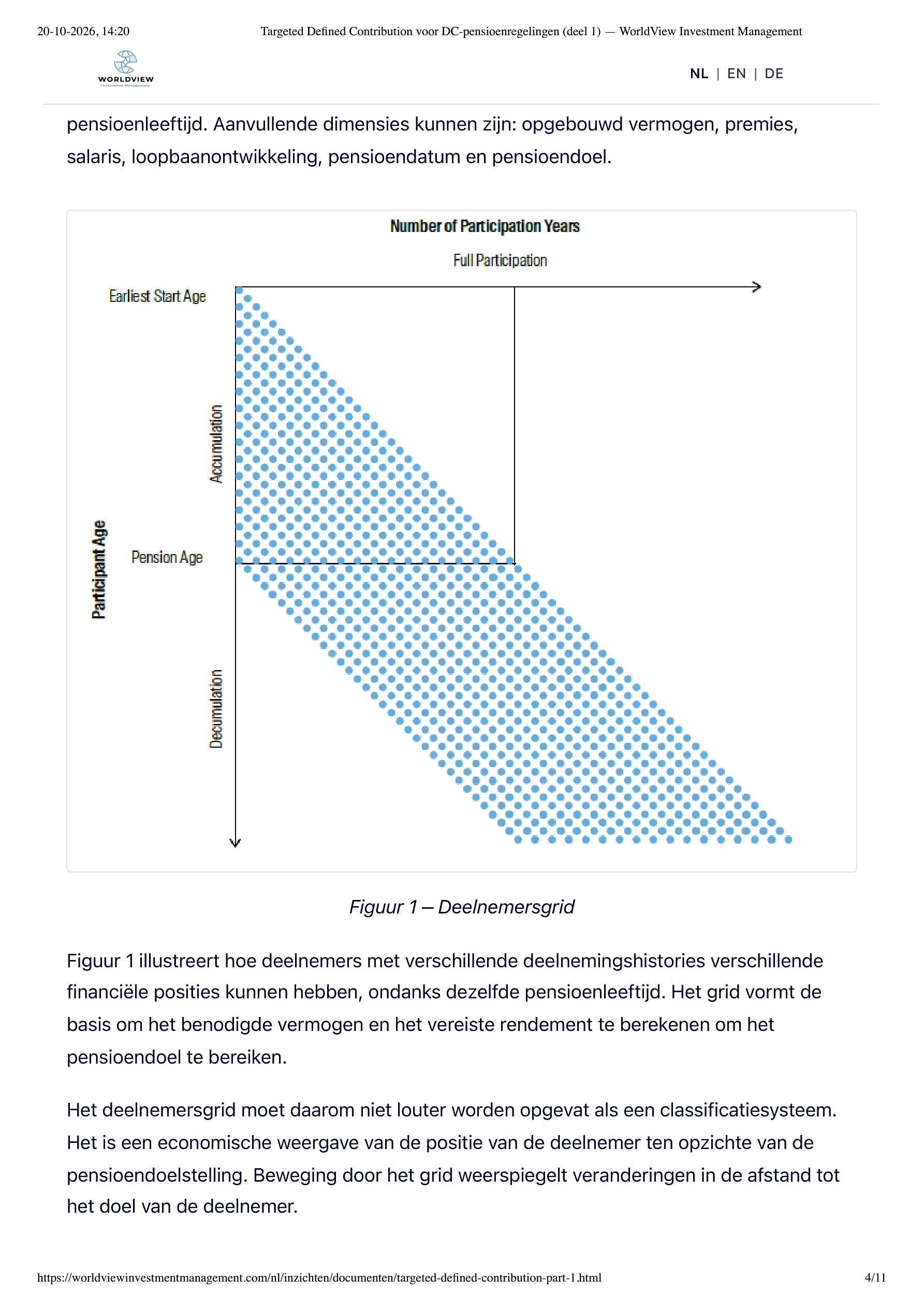
Figure 1 – Participant grid
Figure 1 illustrates how participants with different participation histories can have different financial positions, despite the same pension age. The grid is the basis for calculating the wealth required and the return required to reach the pension objective.
The participant grid should therefore not be read merely as a classification system. It is an economic representation of the participant's position relative to the pension objective. Movement through the grid reflects changes in the participant's distance to the objective.
There is an important distinction between a target annuity and an expected annuity. If the expected return of an investment strategy equals the return required to reach the objective, that does not mean the probability of reaching that objective is high enough. That probability depends on the full distribution of outcomes, the investment horizon, contributions and other relevant assumptions.
The aim is therefore not simply to maximise the expected annuity. Nor is the aim to maximise the probability of success without regard to risk. Instead, the investment strategy should offer an appropriate probability of reaching the defined pension objective, consistent with the participant's tolerance for risk to the pension outcome.
This distinction is central to TDC: the objective determines what the participant is trying to achieve, the probability distribution describes the likelihood of succeeding, and risk tolerance determines how much investment risk can appropriately be taken in pursuit of that outcome.
From the participant grid to a target path
The participant grid can be extended into a dynamic target framework. The target path provides an economic reference point against which the participant's financial position can be monitored.
The following example illustrates how the framework works. The assumptions are illustrative and are not intended as a prescribed Dutch pension objective. We use illustrative policy parameters, not statutory requirements:
- entry age: 20;
- pension age: 65;
- accumulation period: 45 years;
- contribution: 12% of salary.
For participants who are on target or fewer than ten years behind, the illustrative objective is 30% of salary in real terms. For participants who are more than ten years behind, the objective is gradually reduced as the remaining horizon shortens.
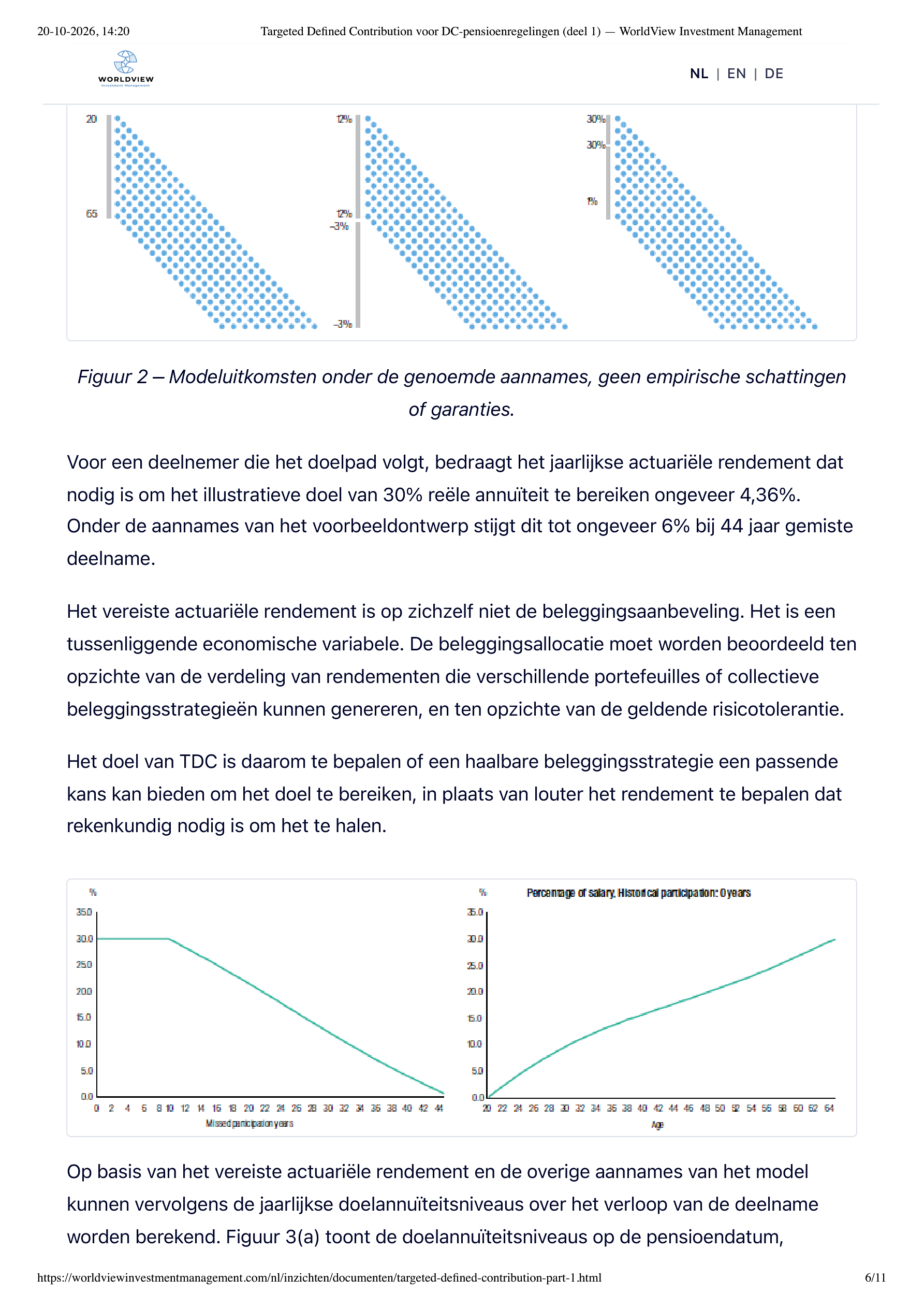
Figure 2 – Model outcomes under the stated assumptions, not empirical estimates or guarantees.
Figure 3 – Target annuity and required return under the stated assumptions, not expected market returns or guarantees.
For a participant who follows the target path, the annual actuarial return required to reach the illustrative objective of a 30% real annuity is about 4.36%. Under the assumptions of the example design, this rises to about 6% at 44 years of missed participation.
The required actuarial return is not in itself the investment recommendation. It is an intermediate economic variable. The investment allocation must be assessed against the distribution of returns that different portfolios or collective investment strategies can generate, and against the applicable risk tolerance.
The purpose of TDC is therefore to determine whether a feasible investment strategy can offer an appropriate probability of reaching the objective, rather than merely calculating the return that is arithmetically required to reach it.
Once the pension objective has been defined, a probability of success can be assigned to each position in the participant grid. In the illustrative design, the probability of reaching the objective of a 30% real annuity is 68% for a new participant entering at age 20, rising to 80% at the pension date as the participant progresses along the target path.
These probability levels should be read as model parameters or policy objectives within the illustrative framework, not as universally optimal levels. In an actual application, the appropriate probability of success should be determined together with collective risk tolerance, the characteristics of the participants and the pension objective.
After the arrangement parameters above have been set, we also model participants by their salary progression. As with many aspects of the design, this depends on the population concerned and must be considered case by case.
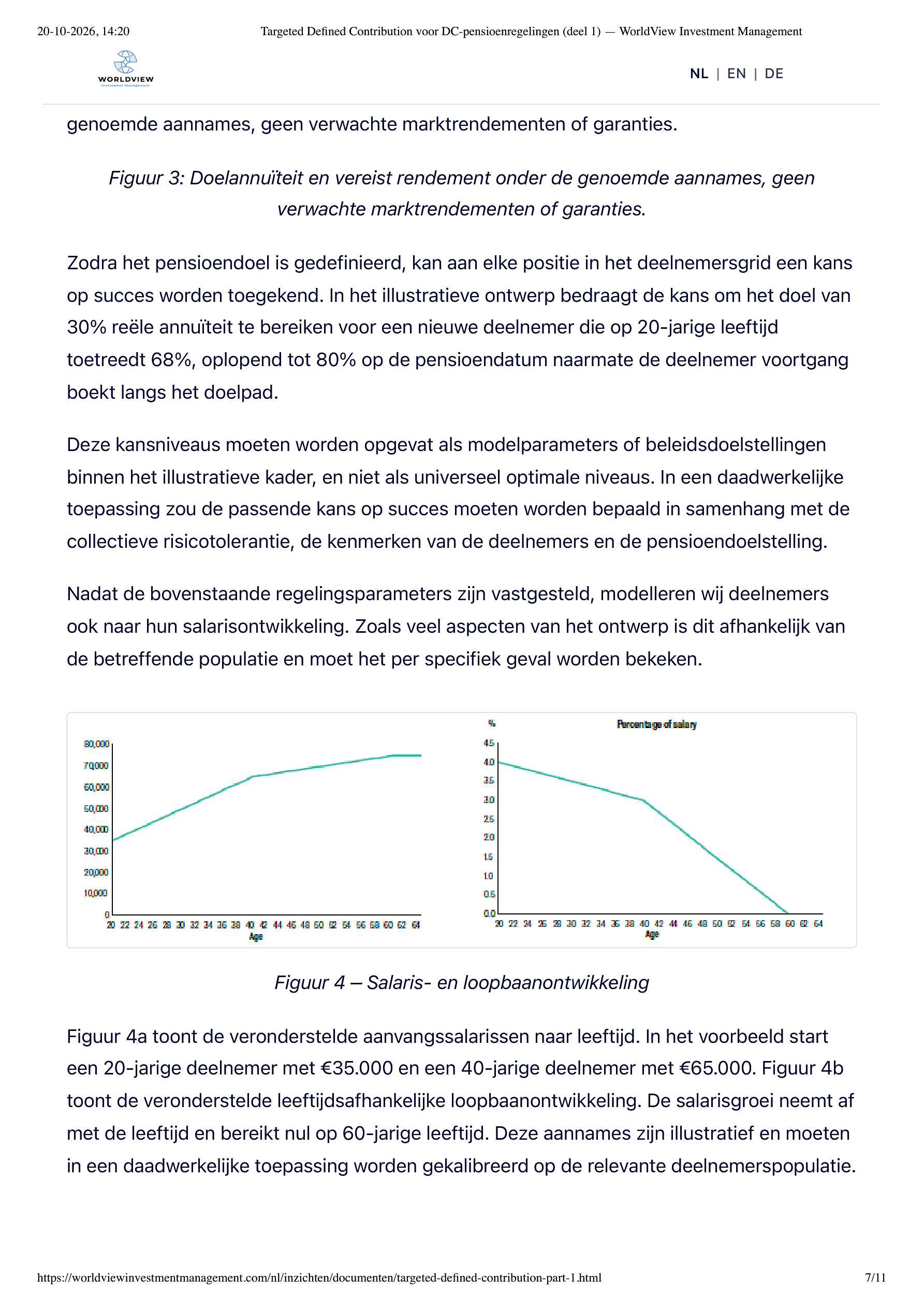
Figure 4 – Salary and career progression
Figure 4a shows the assumed starting salaries by age. In the example, a 20-year-old participant starts at €35,000 and a 40-year-old participant at €65,000. Figure 4b shows the assumed age-dependent career progression. Salary growth declines with age and reaches zero at age 60. These assumptions are illustrative and, in an actual application, should be calibrated to the relevant participant population.
TDC does not require each participant to have a separately managed investment portfolio. The framework can identify differences in participants' economic positions and translate them into differences in the desired risk exposure, while implementation remains collective. Collective risk tolerance is the boundary within which goal-oriented decisions can be taken.
In the SPR, implementation must remain consistent with the arrangement's collective investment and allocation mechanisms. In the FPR, the framework can, where appropriate, support differentiated investment profiles. The aim is not maximum individualisation. The aim is to determine where differentiation delivers enough economic value to justify the additional complexity.
From an age-based lifecycle to objective-based investing
TDC does not reject lifecycle investing. Age remains an important determinant of the investment horizon and of risk tolerance. TDC adds a further dimension:
What is the participant's financial position relative to the pension objective?
Two participants of the same age can therefore have different required returns and probabilities of success. The framework can identify situations in which an age-based lifecycle does not align sufficiently with the participant's actual financial position. The aim is not to replace lifecycle investing, but to address the fact that age alone provides insufficient information for the required risk allocation.
Conclusion of Part 1
The shift from defined benefit to defined contribution makes the connection between the pension objective, the participant's financial position and investment policy more important. TDC establishes that connection by linking:
Pension objective → participant-specific objective → distance to the objective → probability of success → risk tolerance → investment strategy
The essential distinction is that TDC does not start with the question of how much investment risk a participant should bear at a given age. It starts with the pension objective and asks which financial position is required to reach that objective, which probability of success can reasonably be pursued, and which risk tolerance is available for that purpose.
Pension objective → objective → financial position → distance to the objective → required return → distribution of outcomes → probability of success → risk tolerance → investment strategy → dynamic monitoring
TDC thus represents an evolution from an age-driven investment architecture to a goal-oriented architecture, while retaining the collective structure and the ALM discipline of the modern pension arrangement. Part 2 of this position paper focuses on the payout phase and on how wealth can be converted into sustainable real income, while managing longevity risk, investment risk and sequence-of-returns risk.
Part 2 – the decumulation phase
1. Introduction
In Part 1, Targeted Defined Contribution (TDC) was introduced from the accumulation phase. The central question was which financial position is required to reach the pension objective, with what probability of success, and within which risk tolerance.
At retirement the economic question changes. It is no longer primarily about building wealth, but about which pension outcome the accumulated financial position can support over the remaining horizon.
The pension objective therefore does not disappear at retirement. It shifts from target wealth to target income. The core logic remains the same:
Accumulation phase: Pension objective → financial position → required return → distribution of outcomes → probability of success.
Decumulation phase: Pension objective → financial position → pension income → distribution of outcomes → distance to the objective.
From wealth to pension income
Accumulated wealth is not the same as pension income. The ultimate pension outcome is determined by the financial position, the remaining horizon and the relevant economic and actuarial assumptions. Return, inflation, mortality and longevity, the conversion of wealth into income, and the applicable benefit and allocation rules all play a role.
TDC does not prescribe these mechanisms. It provides a framework for assessing the resulting pension outcomes against an explicit pension objective. The relevant result is therefore not only expected pension income, but the full distribution of possible pension outcomes and their distance from the objective.
The objective in the decumulation phase
In the illustrative accumulation-phase model in Part 1, a target of 30% of salary in real terms was used for participants who are on target or fewer than ten years behind. The required actuarial return is about 4.36% for a participant on the target path and, under the illustrative assumptions, rises to around 6% at 44 years of missed participation.
Figure 5 shows how the goal-oriented method is applied in the accumulation and decumulation phases. The starting position expresses the distance to the target path in missed participation years (Missed Participation Years, MPY). At Target means the participant is on the target path; a higher number of MPY means a greater distance to the objective.
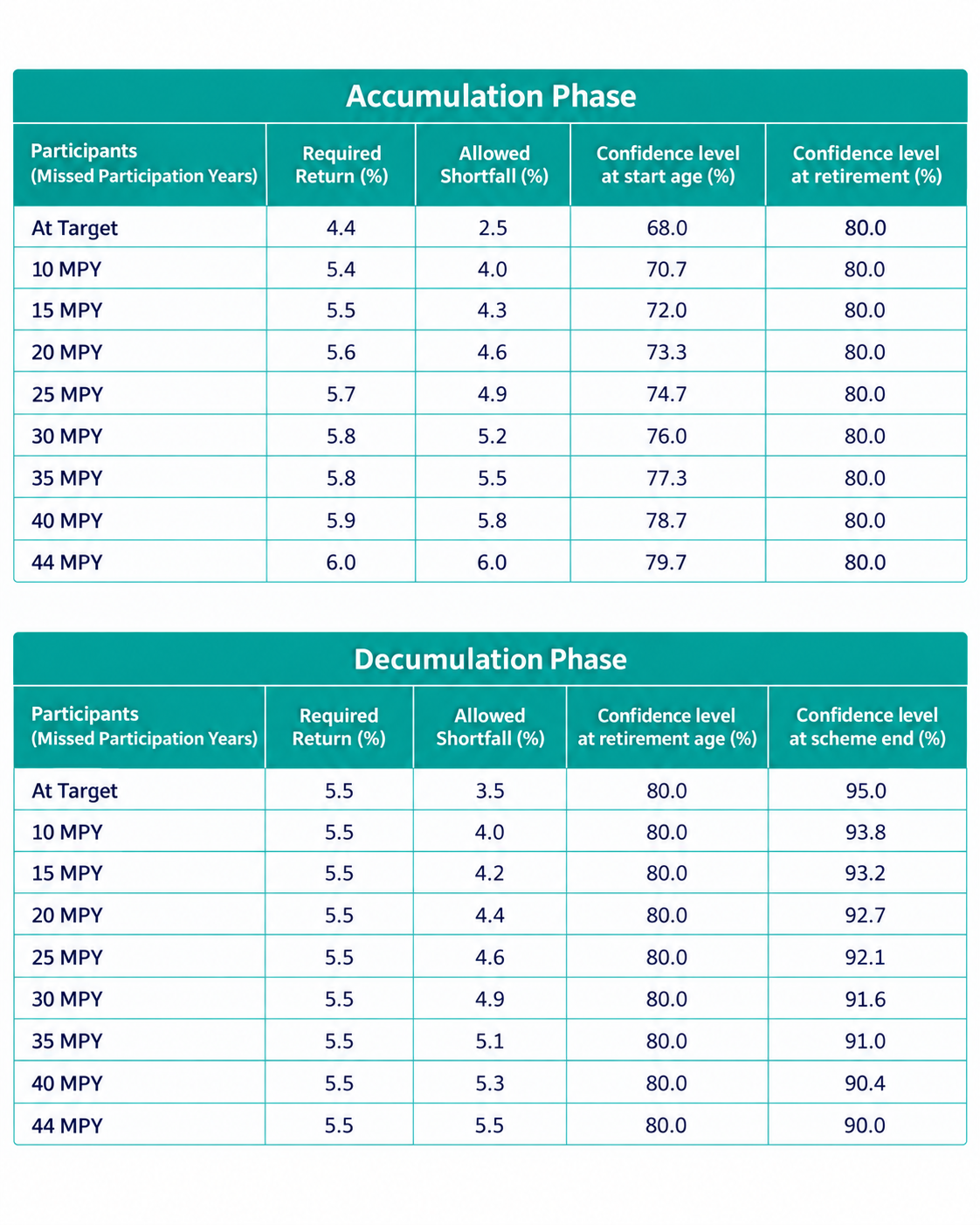
Figure 5 – Relationship between distance to the objective, required return and risk parameters; illustrative parameters for the accumulation and decumulation phases. Not market expectations, statutory requirements or guarantees.
In the decumulation phase the same goal-oriented approach continues. The model includes, among other things, an illustrative required return of 5.5% and a defined band around the objective. These values too are model parameters, not market expectations, statutory requirements or guarantees.
From capital to pension outcome
For every simulated economic scenario, the model determines the path of the wealth relevant to the pension outcome and the pension income that follows from it. The result is not a prediction of a single pension outcome, but a distribution of possible outcomes. The precise way in which wealth is translated into pension income depends on the pension arrangement chosen, the benefit and allocation rules, and the other actuarial and economic assumptions.
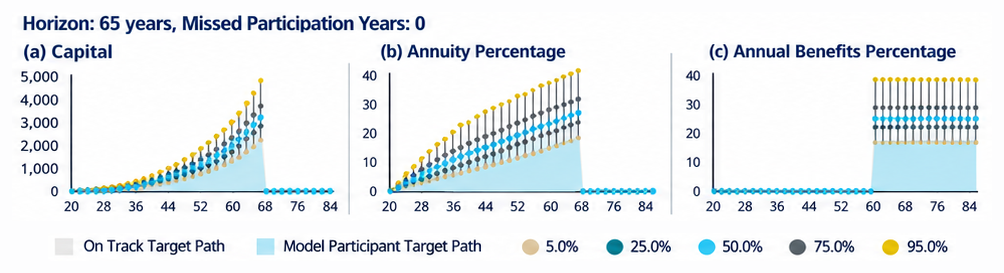
Figure 6 – Distribution of possible pension outcomes. Illustrative model outcomes for an At Target participant with a horizon of 65 years.
Distance to the objective
Part 1 described how participants of the same age can have different financial positions. Years of participation, accumulated wealth, salary progression and other characteristics help determine the distance to the pension objective. That economic distance therefore does not disappear at retirement.
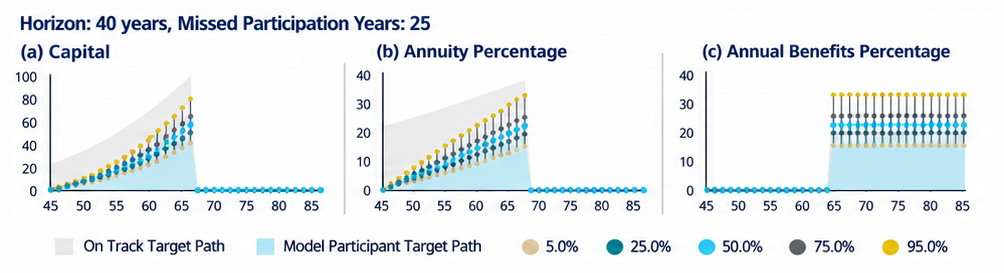
Figure 7 – Pension outcomes at a greater distance from the objective. Illustrative model outcomes for a participant with 25 missed participation years (25 MPY) and a horizon of 40 years.
The relevant insight is that the same goal-oriented method can translate different financial starting positions into different distributions of pension outcomes. After retirement too, it can be monitored how far the financial position is aligned with the pension objective.
Expected pension versus target pension
An expected pension income equal to the objective does not mean that the objective is achieved in every possible outcome. As in the accumulation phase, the assessment should therefore look beyond the expectation to the full distribution of outcomes: dispersion and deviation from the objective, downside risk, and the probability that the outcome remains within the target range.
The assessment thus shifts from expected pension income alone to the extent to which the full distribution of possible pension outcomes aligns with the pension objective.
From objective to investment strategy
The model does not end at the pension outcome. Once the pension objective, the financial position and the distribution of possible outcomes are in view, information also emerges that is relevant to assessing the investment strategy.
In the illustrative model, for example, a decumulation strategy becomes visible in which the composition of investments changes during the payout phase.
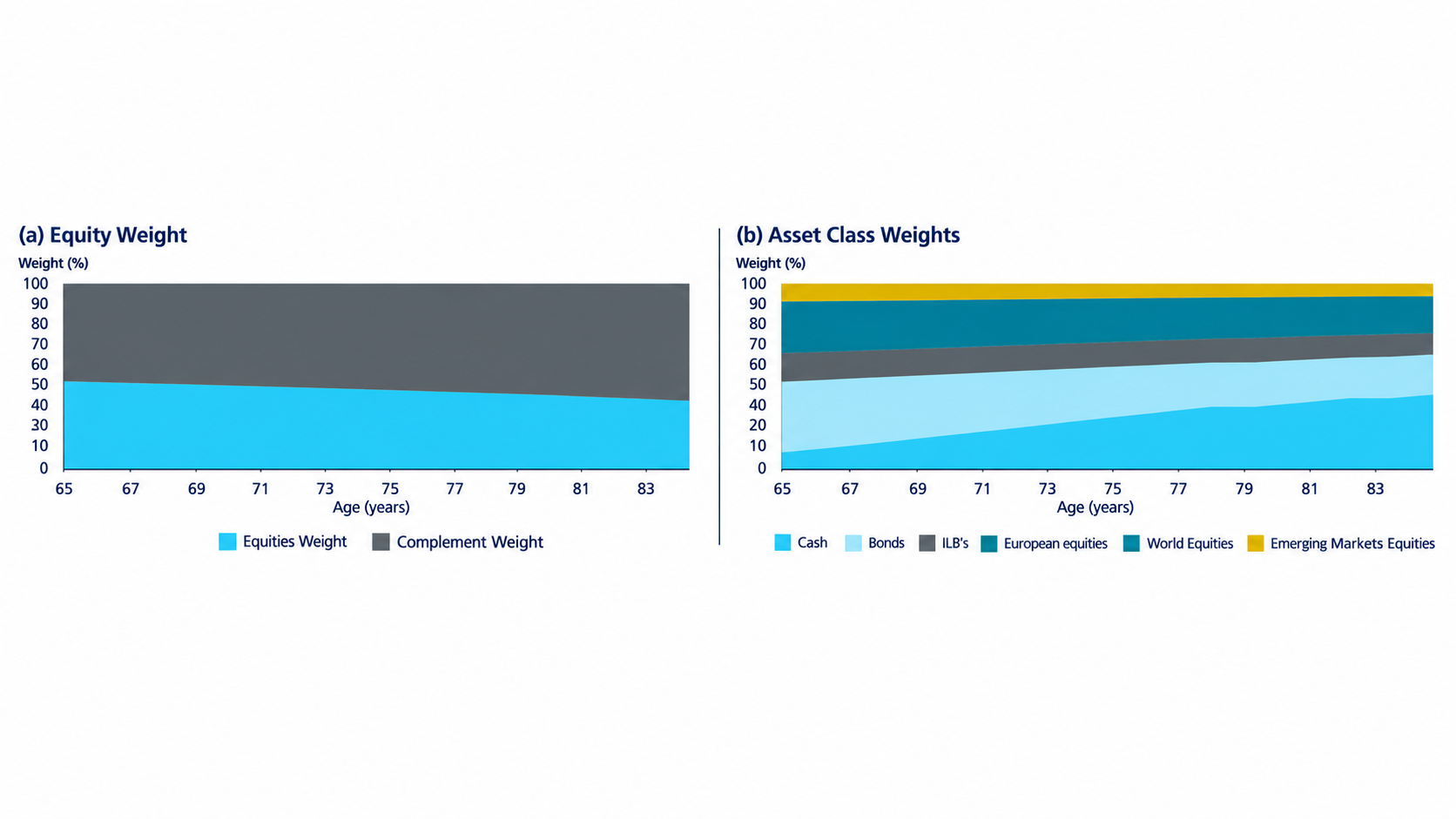
Figure 8 – Illustrative investment strategy in the decumulation phase. Illustrative model outcome for the development of the equity weight and asset-class weights during the decumulation phase.
This investment strategy is not a universal TDC portfolio. The outcome depends on, among other things, the objective, the financial position, economic scenarios, risk tolerance and other model parameters.
The relevant insight is therefore not the specific asset allocation, but the connection:
Pension objective → financial position → distribution of outcomes → assessment of the investment strategy
Within this approach, the investment strategy is not the starting point of the analysis, but a possible outcome of the goal-oriented approach.
TDC within collective DC arrangements
TDC makes the economic position relative to the pension objective visible, without requiring an individually managed investment portfolio. Differences in financial position are analysed and can, where appropriate, then be translated into relevant cohorts or groups. The actual investments and any allocation of return and risk remain part of the existing pension arrangement and its governance.
TDC can therefore be applied within both the solidarity-based pension arrangement and the flexible pension arrangement. It adds a goal-oriented layer of analysis to the existing design: not a different pension contract, but a different way of making the relationship between objective, financial position, risk and investment strategy transparent.
Conclusion
In Part 1, accumulation towards the pension objective was central: the financial position required to reach the objective, the probability of success, and the risk tolerance that fits that aim.
In the decumulation phase the perspective shifts from target wealth to target income. The goal-oriented method remains the same, but the analysis focuses on the pension outcome and the distribution of possible income outcomes relative to the pension objective.
The framework can be summarised as follows:
Accumulation: Pension objective → financial position → required return → probability of success
Decumulation: Pension objective → financial position → pension income → distribution of outcomes → distance to the objective
The pension objective therefore remains the economic reference point throughout the pension period. Only the way in which the financial position is assessed against that objective shifts: from building target wealth to sustainably supporting target income.
TDC thus provides one goal-oriented method for both the accumulation and the decumulation phase. The method shows how the financial position, the distribution of possible outcomes and the chosen risk tolerance relate to the pension objective. That creates a basis for assessing the investment strategy in the light of the pension objective, without TDC prescribing a specific investment or pension design. Part 3 connects this method to the collective design of the solidarity-based pension arrangement (SPR) and the investment and lifecycle structures of the flexible pension arrangement (FPR).
Part 3 – from pension objective to pension design
In Part 1, the financial position relative to the pension objective was central. In Part 2, the perspective shifted to the pension outcome during the decumulation phase.
The next step is the connection with pension design and investment strategy.
Under the Dutch Future Pensions Act (Wet toekomst pensioenen), pension ambition, risk appetite, strategic investment policy and the design of the arrangement come together. TDC adds a goal-oriented analytical layer. The financial position and the pension objective are connected with economic scenarios, financial risk factors, portfolio characteristics and pension outcomes.
The core logic of Part 1 and Part 2 therefore remains intact:
Pension objective → financial position → possible outcomes → achievement of the objective
Part 3 adds the investment dimension:
Economic scenarios → financial risk factors → portfolio characteristics → pension outcomes → achievement of the objective
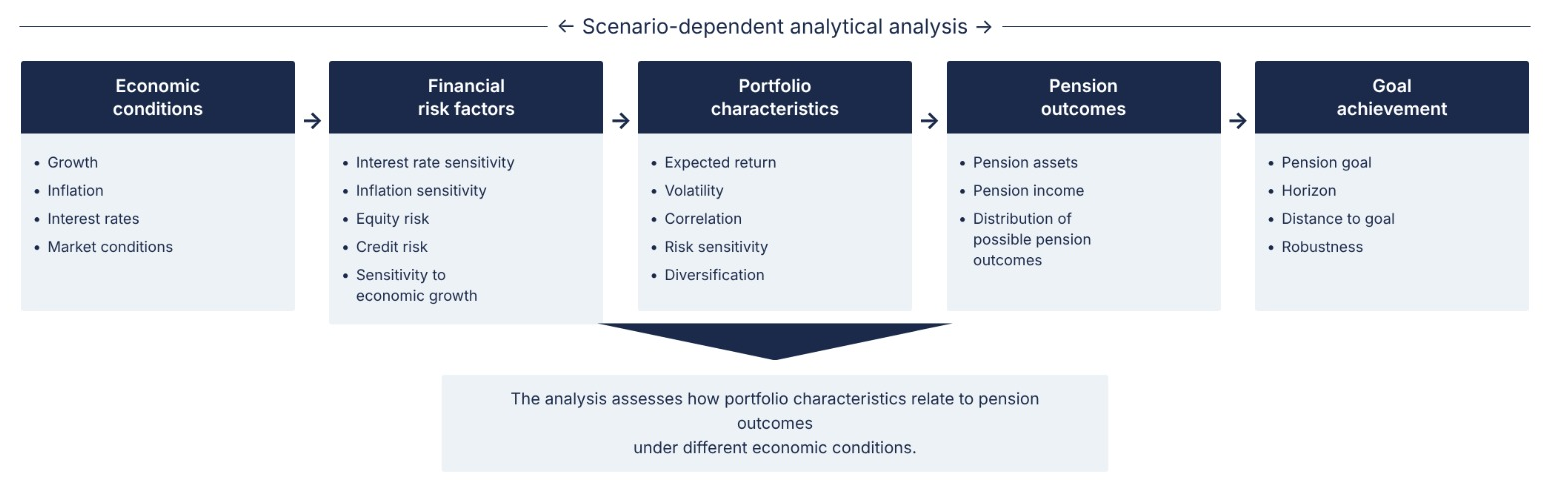
Figure 9 – From economic scenarios to achievement of the objective
Figure 9 shows this analytical chain. Economic scenarios are the starting point. Growth, inflation, interest rates and financial market conditions feed through financial risk factors into the characteristics of a portfolio. Those characteristics help determine the distribution of possible pension outcomes. The final assessment is made against the pension objective.
TDC provides the scenario framework for this. Economic and financial variables are modelled together through time. Different economic conditions can therefore be translated into the financial characteristics and possible pension outcomes of portfolios.
The analysis thus goes beyond the expected return of a portfolio. Interest rates, inflation, economic growth, equity risk, credit risk, currency, volatility and correlations also determine how a portfolio works economically.
Two portfolios with similar asset-class weights can therefore have different economic characteristics. Conversely, different asset-class combinations can contain similar financial risk factors.
TDC makes these underlying characteristics visible in relation to the pension objective.
From ALM to an independent investment lens
ALM brings pension ambition, financial position, risk appetite, scenarios and investment policy together. ALM is therefore an important foundation for the strategic design of a pension arrangement.
TDC adds a further investment lens. Where ALM analyses the connection between pension policy and investment policy as a whole, TDC focuses specifically on the economic and financial characteristics of the portfolio and their contribution to achievement of the objective.
The chosen portfolio can be assessed from an analysis of economic scenarios and risk factors. Portfolio characteristics, the distribution of possible pension outcomes and robustness relative to the pension objective come together in that assessment.
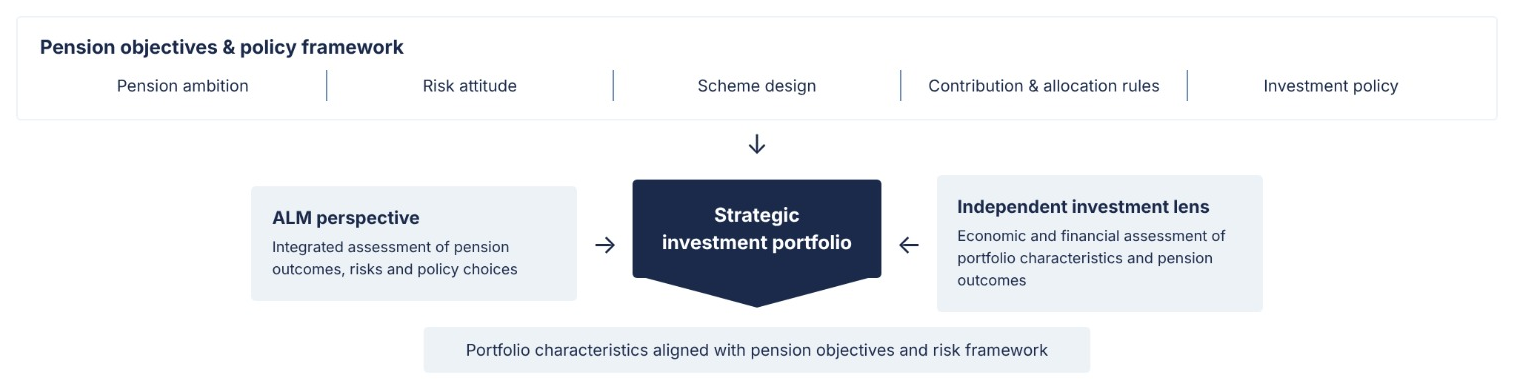
Figure 10 – From ALM to an independent investment lens
Figure 10 places the two perspectives side by side. ALM reasons from pension ambition and policy frameworks towards the strategic design. The TDC lens then analyses the economic and financial characteristics of the portfolio and how they feed through into pension outcomes.
The two perspectives meet at the strategic investment portfolio. That is where the independent investment lens arises: an additional assessment of the economic and financial logic of the chosen portfolio.
TDC thus adds an explicit test of which economic and financial characteristics the chosen portfolio has, and to what extent those characteristics contribute to achievement of the objective within the established policy frameworks.
The assessment can focus on:
- the expected contribution to the pension objective;
- sensitivity to relevant economic scenarios;
- diversification across financial risk factors;
- the distribution of possible pension outcomes;
- robustness relative to the objective and the horizon.
The Weighted Risk Metric (WRM) supports this comparison by bringing together the objective, the horizon and the chosen risk framework. The WRM relates the risk of a portfolio to the probability distribution of the relevant pension outcome against the pension objective, given the chosen horizon and risk framework. The WRM therefore serves as a measure of comparison within the TDC analysis and shows differences between portfolios and their relationship to achievement of the objective.
Risk appetite forms the policy framework. TDC supports the analysis of the portfolios and outcomes that are assessed within that framework.
The investment lens is thus a complement to ALM and the existing governance process: it makes explicit which economic and financial characteristics of the investment strategy contribute to the pension objective, and how robust that contribution is under differing economic conditions.
TDC within SPR and FPR
The same analytical approach can be applied within different collective pension designs. Within the solidarity-based pension arrangement (SPR), contributions are invested collectively and returns and risks are distributed across participants and cohorts according to the chosen allocation rules. In the flexible pension arrangement (FPR), the investment design is usually shaped through lifecycles and investment profiles. In both cases TDC adds a goal-oriented analytical layer.
The essence is that analytical granularity and implementation granularity serve different functions. TDC can make economic positions visible at participant or cohort level, while the actual investment is organised collectively.
Within the SPR, this analysis can be connected to the collective portfolio and the chosen allocation rules. At cohort level it can then be analysed how the financial position and the pension objective relate to the collective investment strategy and to the way return and risk are allocated.
Within the FPR, the same analysis can be connected to the design of lifecycles and investment profiles. That shows how financial position, pension objective, horizon and investment risk relate to one another within the chosen investment design.
Analytical differentiation does not have to be translated one-for-one into investment implementation. An economic position at cohort or participant level can be part of a collective portfolio, a lifecycle or an investment profile. Figure 11 makes this distinction visible.
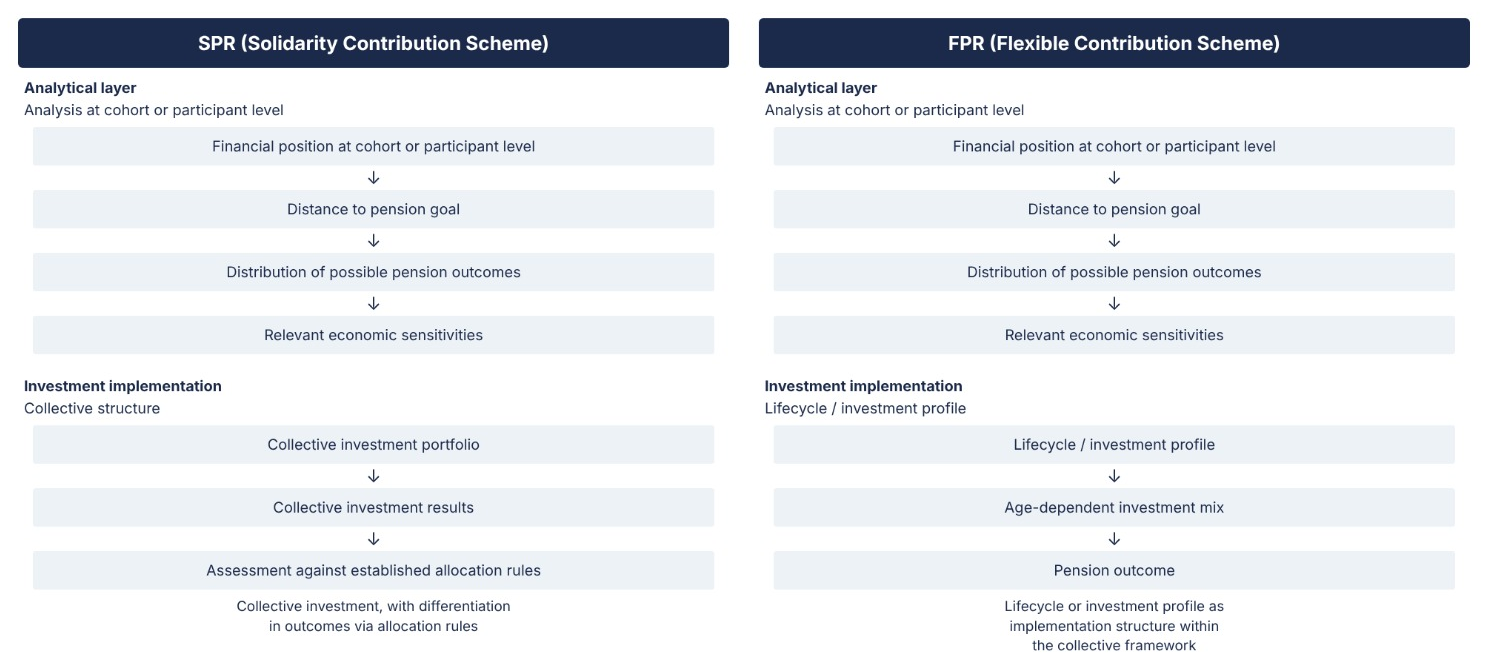
Figure 11 – Analytical granularity ≠ implementation granularity
TDC can, for example, analyse at cohort or participant level:
- financial position;
- distance to the pension objective;
- remaining horizon;
- financial risk factors;
- the distribution of possible pension outcomes.
The actual investment can then be carried out within the existing collective structure. This makes TDC applicable alongside both collective allocation mechanisms within the SPR and lifecycle structures and investment profiles within the FPR.
From portfolio characteristics to achievement of the objective
The elements come together when existing and alternative portfolios are assessed within the same economic scenario framework. A similar expected return can go together with different distributions of possible pension outcomes. The underlying financial risk factors and economic sensitivities help determine the difference. Assessing different portfolios from the same objective, the same horizon and the same scenario framework shows how portfolio characteristics feed through into pension outcomes and achievement of the objective.
The analysis brings three elements together:
Objective → Risk → Outcome
The objective determines what is relevant. The risk framework determines which deviations are appropriate. Scenario analysis shows how different portfolios behave under differing economic conditions.
That creates a concrete basis for an independent portfolio review, in which the economic and financial characteristics of the strategic investment portfolio are assessed in relation to the pension objective, the horizon and the risk framework. The independent portfolio review is therefore an additional assessment of the economic and financial logic of the portfolio within the existing pension and risk frameworks.
The strength of this approach lies in the connection between economic scenarios, financial risk factors, portfolio characteristics and pension outcomes.
Conclusion
Part 1 described TDC from the accumulation phase:
Financial position → required return → probability of achieving the objective
Part 2 shifted the perspective to the decumulation phase:
Financial position → pension income → distribution of outcomes → distance to the objective
Part 3 connects this goal-oriented analysis with pension design and investment strategy:
Economic scenarios → financial risk factors → portfolio characteristics → pension outcomes → achievement of the objective
Within the SPR, this approach aligns with collective investment, cohort allocation and the chosen risk appetite. Within the FPR, it aligns with lifecycles and investment profiles. TDC is therefore a goal-oriented analytical layer on top of the existing pension architecture.
The added value lies in the explicit connection between economic scenarios, financial risk factors, portfolio characteristics and pension outcomes. From that connection comes an independent investment lens on the contribution of the investment strategy to the pension objective.
For professional and institutional parties only.